
Four Financial Warning Lights Investors Should Not Ignore
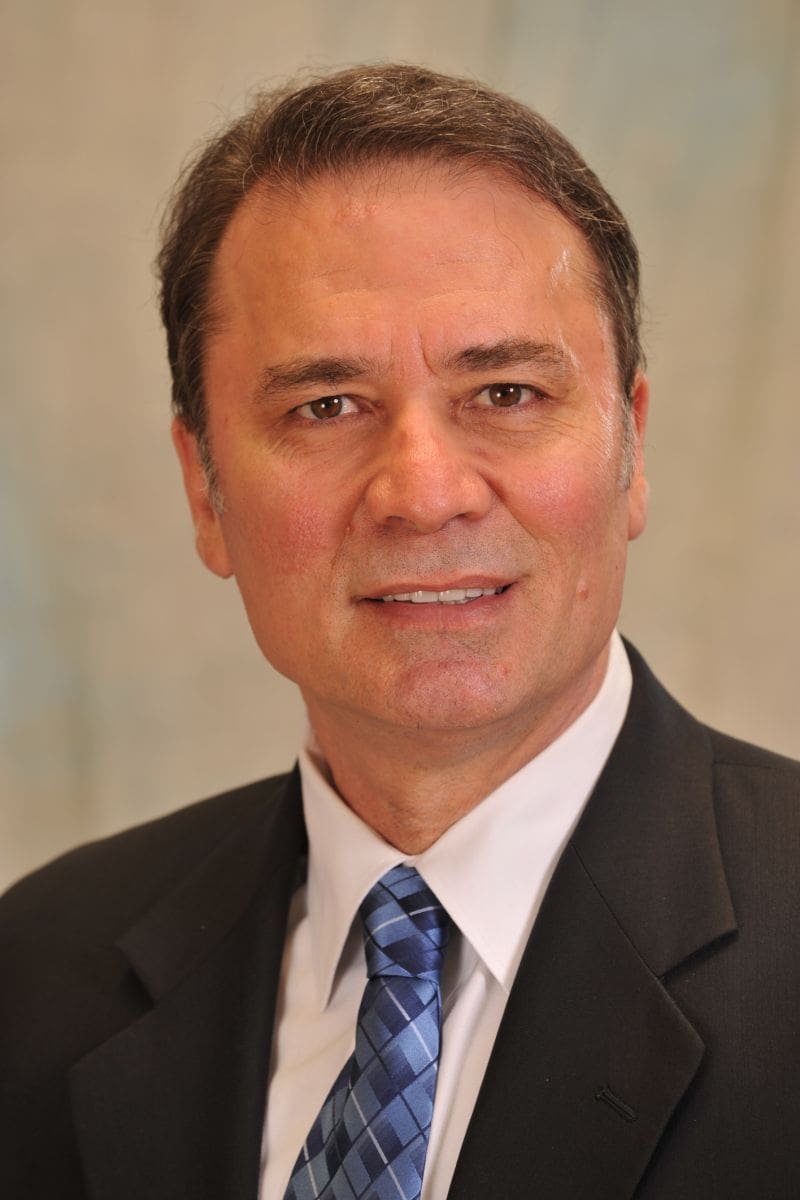
By Mike Bonham, VP of Sales, Tangible Investments
“The goal is preparation, diversification, and a plan designed before the next period of volatility makes decisions more difficult.”
I have spent decades working with collectors, investors, families, and estates. One lesson has remained constant through every market cycle: the best time to examine risk is before everyone else is forced to do it at once.
Today, four financial warning lights are flashing at the same time. Stock valuations remain near historic extremes. Berkshire Hathaway is holding nearly $400 billion in cash and short-term Treasury securities. The federal debt is approaching $40 trillion. And central banks around the world continue to accumulate gold at a pace far above the long-term average.
None of these signals can tell us the exact day the market will turn. I am not making that prediction, and neither is Warren Buffett. But taken together, they should cause every serious investor to ask a direct question: If the next period is different from the last one, is my wealth positioned for it?
Warning Light No. 1: Market Valuations Are Historically High
Investors have enjoyed years of strong equity performance, much of it driven by a relatively small group of dominant companies and intense enthusiasm surrounding artificial intelligence. Innovation is real. Great companies will continue to be built. But even the best business can become a poor investment when the price paid for it assumes too much future success.
One widely followed measure, the cyclically adjusted price-to-earnings ratio, or CAPE ratio, is around 40. That places it among the highest readings in the historical series and near territory associated with the dot-com era. Another broad measure comparing the value of the stock market with the size of the economy remains well above 200 percent.
These measurements are not clocks. A highly valued market can keep rising, sometimes for much longer than skeptics expect. What valuations can tell us is that expectations are already high and the margin for disappointment may be getting smaller.
That matters most for people who are close to retirement or already drawing income from their portfolios. A younger investor may have decades to recover from a major decline. A retiree who must sell assets during a downturn faces a different problem. Losses combined with ongoing withdrawals can permanently reduce the amount of capital available for a recovery.
I am not suggesting that investors abandon productive businesses or sell every stock they own. I am saying that concentration deserves attention. If most of your retirement security depends on the same market continuing to deliver the same kind of returns, you may have more exposure than you realize.
Warning Light No. 2: Berkshire Hathaway Is Holding Nearly $400 Billion
Warren Buffett has never needed to shout to get the market’s attention. His decisions speak for him.
At the end of the first quarter of 2026, Berkshire Hathaway reported approximately $397.4 billion in cash and short-term Treasury holdings. During the quarter, Berkshire sold about $24 billion of equities and purchased about $16 billion, leaving the company a net seller of stocks.
Buffett also described the current financial environment as one in which people have never been in a greater gambling mood. He did not say that investing itself was a mistake. His point was that the prices of many things may eventually look very silly.
That distinction is important. Buffett is not predicting a crash on a schedule, and he is not making an argument for gold. Berkshire has enormous insurance obligations, operating needs, and acquisition requirements that are unlike those of an individual household. But its position demonstrates something every investor can understand: price matters, liquidity matters, and patience matters.
When one of history’s most disciplined capital allocators cannot find enough opportunities that meet his standards, I pay attention. I do not treat it as an instruction to copy Berkshire trade for trade. I treat it as a reminder that we should not confuse rising prices with disappearing risk.
Warning Light No. 3: Federal Debt Is Approaching $40 Trillion
The United States’ total public debt is now nearly $40 trillion. That number is so large that it can become abstract, but its consequences are not.
A growing debt burden means more federal resources must be directed toward interest expense. It increases pressure on future budgets and limits the government’s flexibility when the next recession, financial emergency, or geopolitical crisis arrives. It also creates a long-term temptation to tolerate inflation because inflation reduces the real burden of fixed-dollar debt.
Cash is necessary. Every family and business needs liquidity. But cash and safety are not identical concepts. Cash can remain stable on an account statement while losing purchasing power in the real world. From roughly the middle of 2021 through the middle of 2026, consumer prices rose by more than 20 percent. A dollar did not disappear, but what it could buy changed significantly.
That is the quiet risk many investors overlook. Stock-market losses are visible immediately. Purchasing-power losses happen slowly, one grocery bill, insurance renewal, property-tax bill, and medical expense at a time.
For retirees, the objective is not simply to avoid volatility. It is to preserve the ability of accumulated wealth to support real expenses over many years. That requires a broader conversation than choosing between stocks and cash.
Warning Light No. 4: Central Banks Continue to Buy Gold
Central banks do not buy gold because it is fashionable. They hold it because it is a reserve asset with no counterparty liability, it can diversify currency exposure, and it has historically remained relevant during periods of monetary and geopolitical stress.
According to the World Gold Council, central banks accumulated an average of approximately 1,000 tonnes of gold per year over the last four years, roughly double the average pace of the preceding decade. In its 2026 survey, 89 percent of responding central banks expected global official gold reserves to increase over the next 12 months. A record 45 percent expected their own institutions to increase gold reserves.
Those numbers do not guarantee that gold will rise. Gold can be volatile. It does not pay a dividend, and physical ownership includes considerations such as purchase premiums, storage, insurance, liquidity, and dealer spreads. Anyone presenting gold as a guaranteed return is not giving you the complete picture.
But the central-bank activity tells us something important. The institutions responsible for managing national reserves continue to see a strategic role for an asset that cannot be created by a central bank, does not depend on a corporation’s earnings, and is not another government’s promise to pay.
Individual investors have different objectives from central banks. Still, when official institutions are diversifying reserves while many households remain almost entirely dependent on financial assets denominated in dollars, the contrast deserves serious consideration.
The Question Is Not Whether to Panic. It Is Whether to Prepare.
I have seen investors make mistakes at both ends of a cycle. Some become too aggressive when markets are rising because risk appears to have disappeared. Others wait until prices are falling, fear is everywhere, and choices become emotional. Neither approach produces a sound long-term strategy.
The better approach is to review your position while you still have time and options. How concentrated are you in equities? How much of your wealth depends on the purchasing power of the dollar? Do you have sufficient liquidity? Do you own assets that behave differently from stocks and bonds? If your circumstances changed suddenly, would your family know what you own, what it is worth, and whom to call?
For some investors, physical gold may be one part of that answer. For others, rare coins can offer a combination of scarcity, historical importance, artistic quality, and appreciation potential that is not directly tied to corporate earnings or daily market sentiment. These are different markets, with different risks, and they require experienced guidance. Quality, authenticity, pricing, liquidity, custody, and an eventual exit strategy all matter.
At Tangible Investments, we do not believe a client relationship should begin and end with a purchase. We want to understand what the client is trying to protect, what time horizon they are working with, and how an asset may eventually be sold, transferred, or handled by their heirs. That long-term plan is just as important as the initial acquisition.
We have spent more than 40 years navigating changing markets and more than $2 billion in transactions involving rare coins and tangible assets. We have seen enthusiasm, fear, opportunity, and excess. The specific headlines change, but the value of discipline does not.
Four warning lights are now visible. Historically elevated valuations are reducing the margin for error. Berkshire’s record liquidity is demonstrating patience at an extraordinary scale. Federal debt is creating long-term pressure on the dollar’s purchasing power. Central banks are continuing to treat gold as a strategic reserve asset.
No single one of those facts tells you what to buy tomorrow. Together, they tell you that now is a responsible time to review what you own.
If your wealth is concentrated in stocks, cash, or retirement accounts that have never been evaluated alongside physical tangible assets, let us have a conversation. The goal is not fear. The goal is preparation, diversification, and a plan designed before the next period of volatility makes those decisions more difficult.
PROTECT YOUR WEALTH. CONTACT US TODAY
If you are interested in protecting or even growing your wealth through the investment of rare coins, we invite you to contact us. At Tangible Investments, we have over 40 years of numismatic expertise and are proud members of PCGS, CAC, and PNG. One of our experts can guide you in reaching your financial goals, ensuring that your investments are tailored to your specific needs and objectives.